


“I can’t…exclude companies that don't translate accurately 100%...I need to pick objectively what is best.”
In this remote, unmoderated testing of a Mailchimp competitor in various languages and dialects, we learned that localizing an entire product to a specific dialect is less important than functionality, and localizing support resources to a native language should be a top priority when translating + localizing a product.
Context
As the Mailchimp Internationalization team continued to translate the Mailchimp app experience into non-English languages, the team needed to gauge how specifically we need to localize the languages into particular dialects per market in order for someone to feel this product is for them and ultimately become a paid customer.
Prioritized languages (and dialects) for this effort were as follows:
Spanish (Latin America, Spain)
English (England, Ireland)
Portuguese (Brazil, Portugal)
Product Lifecycle
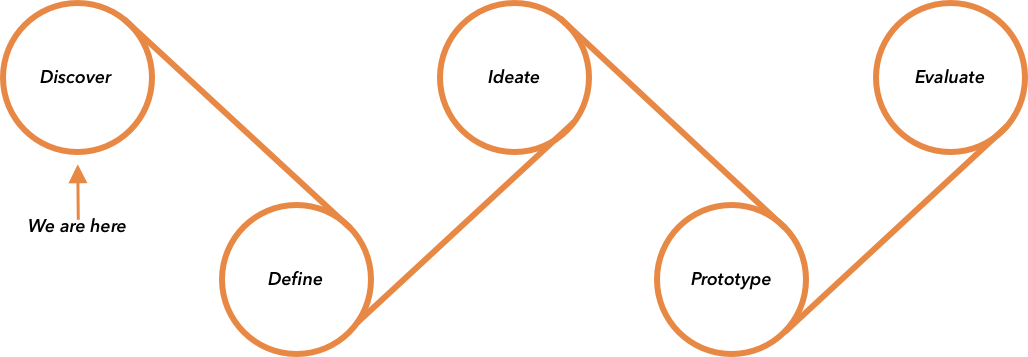
We are aiming to discover the qualities that a speaker of a particular language is and isn’t ambivalent towards regarding a solution’s language and/or dialect, style/design, brand, country of origin, price, quality, function, and integrations in order to prioritize localization efforts.

6
Dialects Examined
19
Unmoderated Interviews
Breakdown of Users by Language and Dialect
Spanish
Columbia: 1 User
Spain: 4 Users
Portuguese
Brazil: 4 Users
Portugal: 4 Users
English
England: 4 Users
Ireland: 2 Users
Research Questions
How ambivalent or not are non native-English speakers to seeing a solution in their specific dialect VS their language (but not their dialect)? How does that affect their likelihood to purchase or choose Mailchimp over more localized solutions?
If a country is ambivalent towards a solution’s language and/or dialect, what are they less ambivalent about? Style/Design? Brand? Country of origin? Price? Quality? Function? Integrations?
What are things that users notice in solutions that signal to them it’s an unlocalized solution, and does this affect their likelihood to convert?
Methodology

I implemented unmoderated studies via UserTesting due to its
Time efficiency
Ability to more easily recruit international and non-native English speakers
Contents of the test could be relatively easily completed without moderation, avoiding potential language barriers and timezone differences.
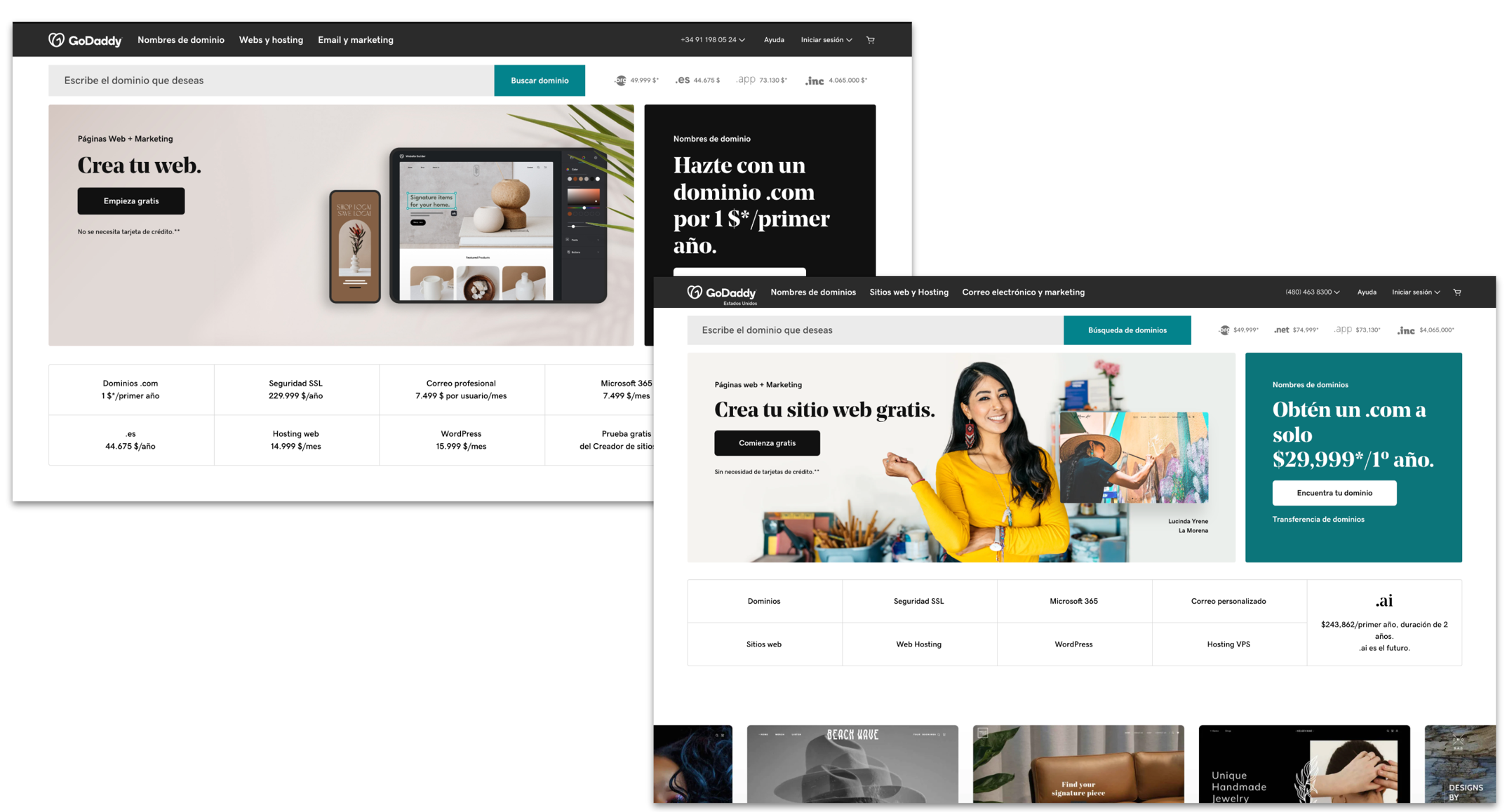
Users were given 2 versions of the same marketing site to test
One in their native dialect
One in a different dialect of the same language.
On a high level, they were asked to explain:
Any perceived differences between the two
How readable each one was for them
If one felt more “for them” than the other and explain why or why not
If those differences affected any perceived value and altered their decision to purchase a tool or not
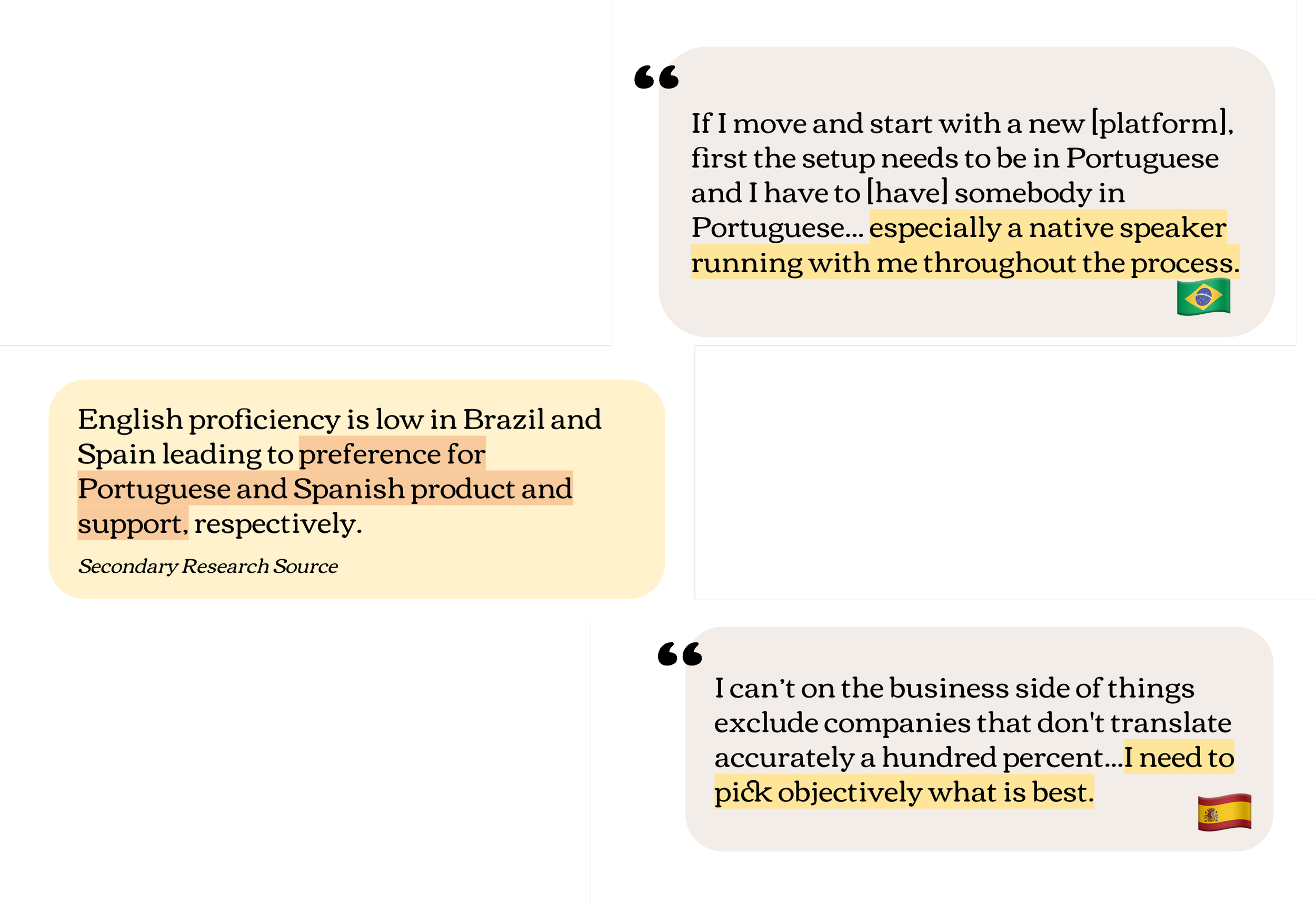
Key Insight #1: Business needs > Dialect or Accurate Translation
Accurate currency is more important than dialect.
Localized phone number and support are more important than dialect.
Date Formatting is more important than dialect.
RECOMMENDATION: Prioritize localization to account for currency, support resources, and dates when localizing the Mailchimp experience since dialect is not a conversion lever.
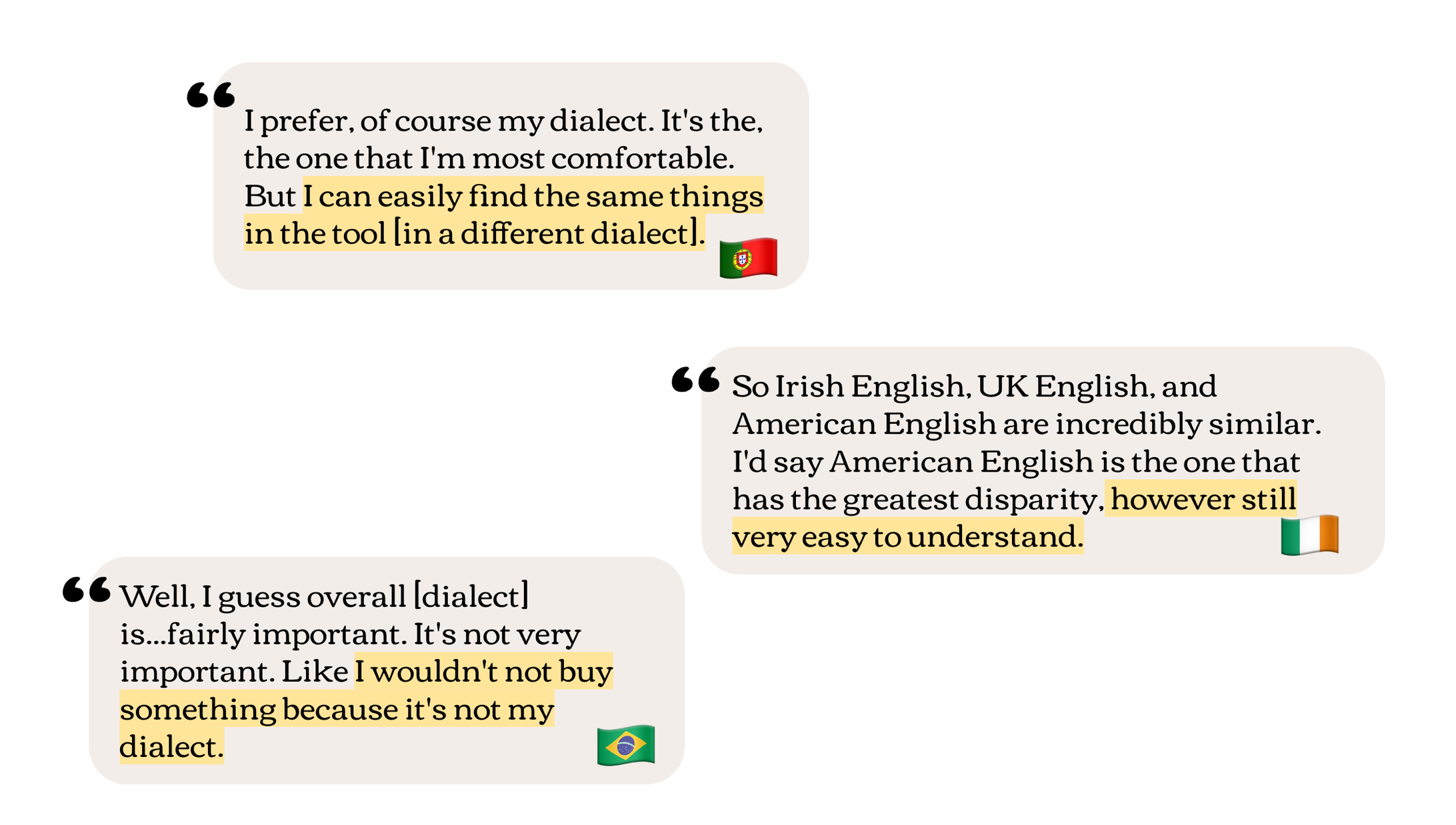
Key Insight #2: Dialect is preferred for ease of understanding but isn’t a limitation nor necessarily an expectation
Users don’t perceive seeing a different dialect as an “error.”
All language groups can discern dialect differences and are comfortable translating dialects on-the-fly.
RECOMMENDATION: There is little need to completely localize to specific dialects, thus localization teams should focus on translating the app within a single language.
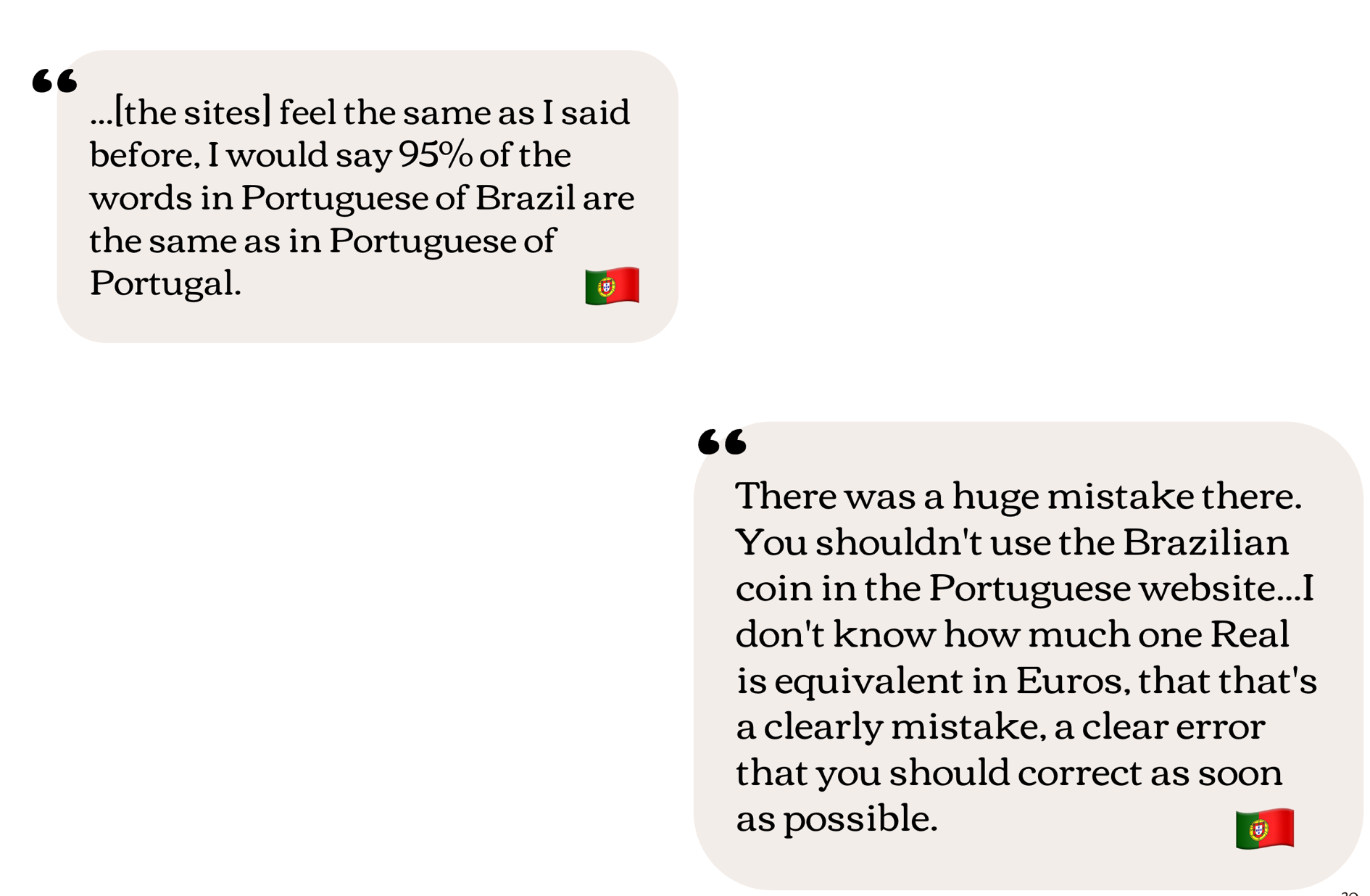
Key Insight #3: All language groups used similar criteria to evaluate if a solution is “made for them” but couldn’t identify major differences between sites in different dialects
People honed in on
1. Language
2. Currency
3. Support phone number
4. Imagery
Generally, users usually could not point out major differences between the two sites outside of 1) Slight differences in grammar and 2) Images with no site appealing significantly more to one’s culture than the other.
RECOMMENDATION: Prioritize localization to account relevant imagery because, again, users don’t need or expect their exact dialect within a solution made outside of their country.
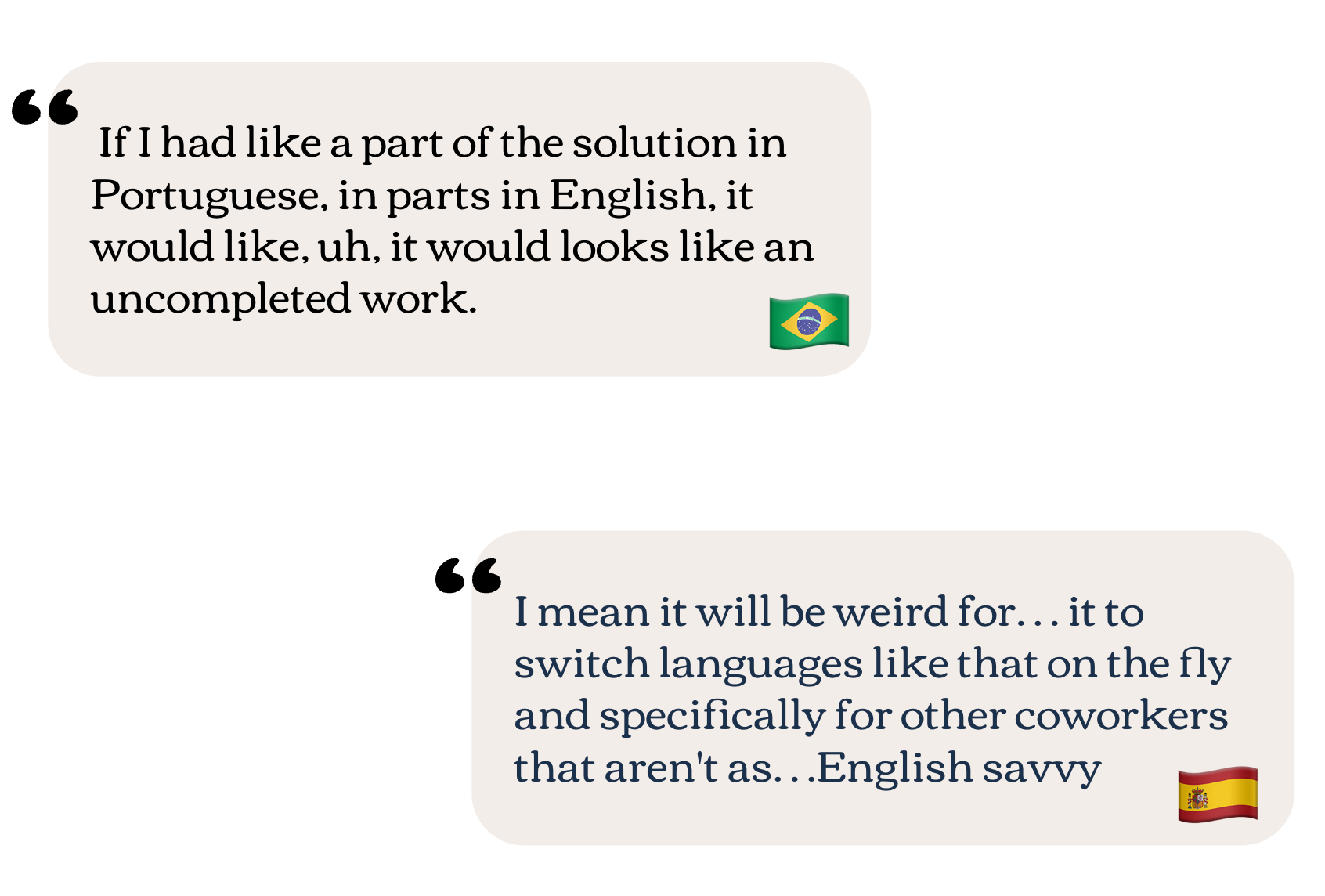
Key Insight #4: Mixing languages within a solution comes off as incomplete or an error
Users described dissatisfaction with a subbed support video, despite the rest of the site being in Spanish.
RECOMMENDATION: Ensure entire app is translated into single language before release to ensure professional branding that isn’t prone to error.
Impact of this Research
The team was able to save significant time and money by not prioritizing localization strategies that involved translating the app into specific dialects since dialects were found to not encourage significant improvements to conversion rates, and were able to prioritize their roadmap to tackle translating the app in more languages such as German and Italian.
The team was able to tackle the identified issues that could impact international conversion rates which were:
Localized Currency
Fully translated support resources
Localized support phone