
Project Type: UX Research, UX Design
Time-frame: August 2017 - December 2017
My Contributions: User Research, User Testing, Qualitative Data Analysis
Overview
Making a purchase decision in an offline environment can be much more difficult than in an online environment, especially when the product has so many features, designs, and qualities like headphones. When in a store, shoppers have very limited sources of information presented to them, whereas when buying online, the user can check reviews, detailed product specifications, as well as have the convenience of shopping from home. How can we provide more detailed information (like reviews, technical specifications, and price comparisons) to the user while they are in-store?
Research
Field Studies
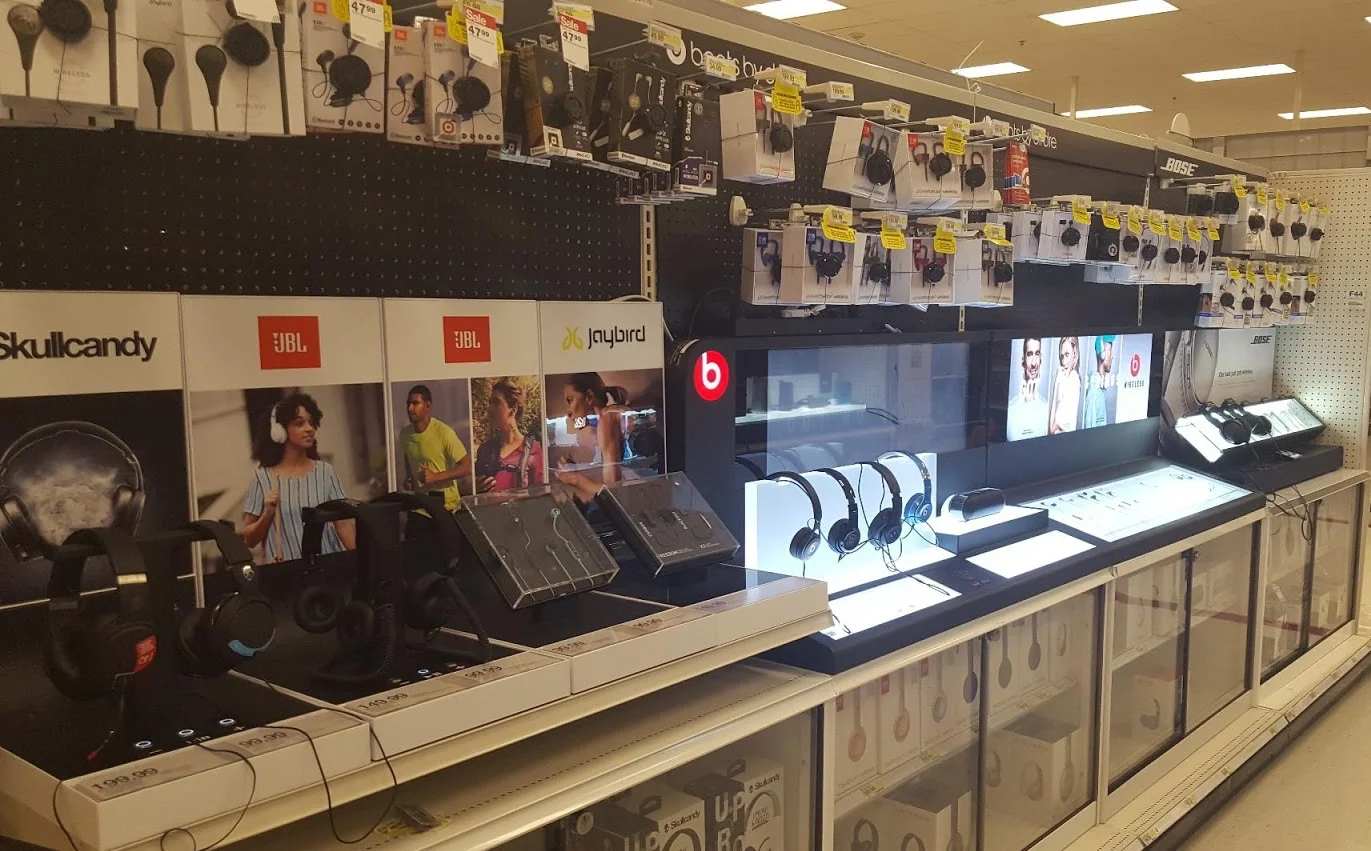
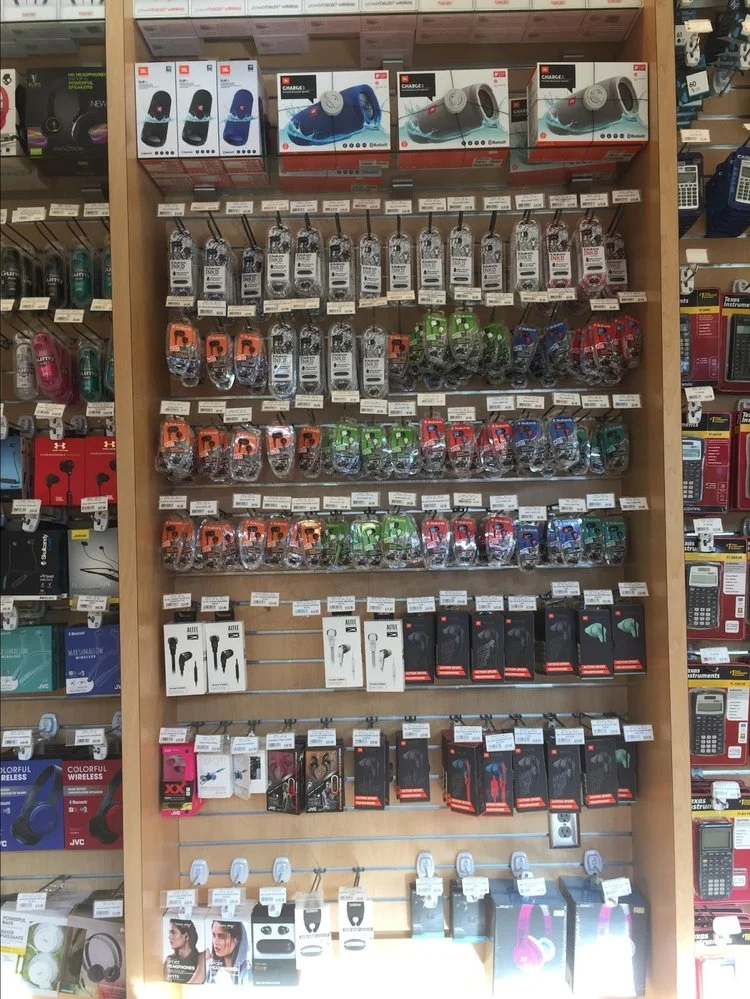
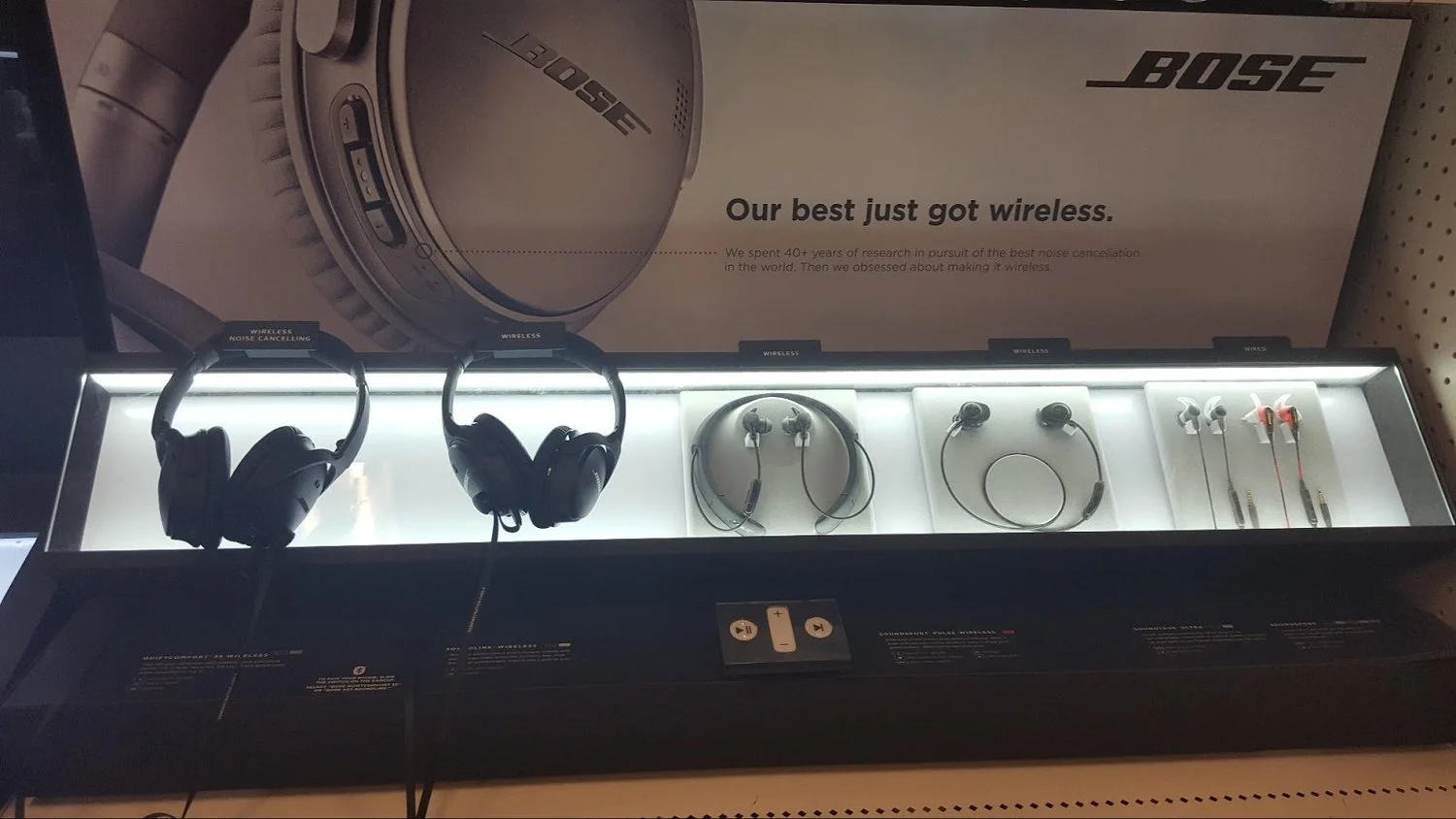
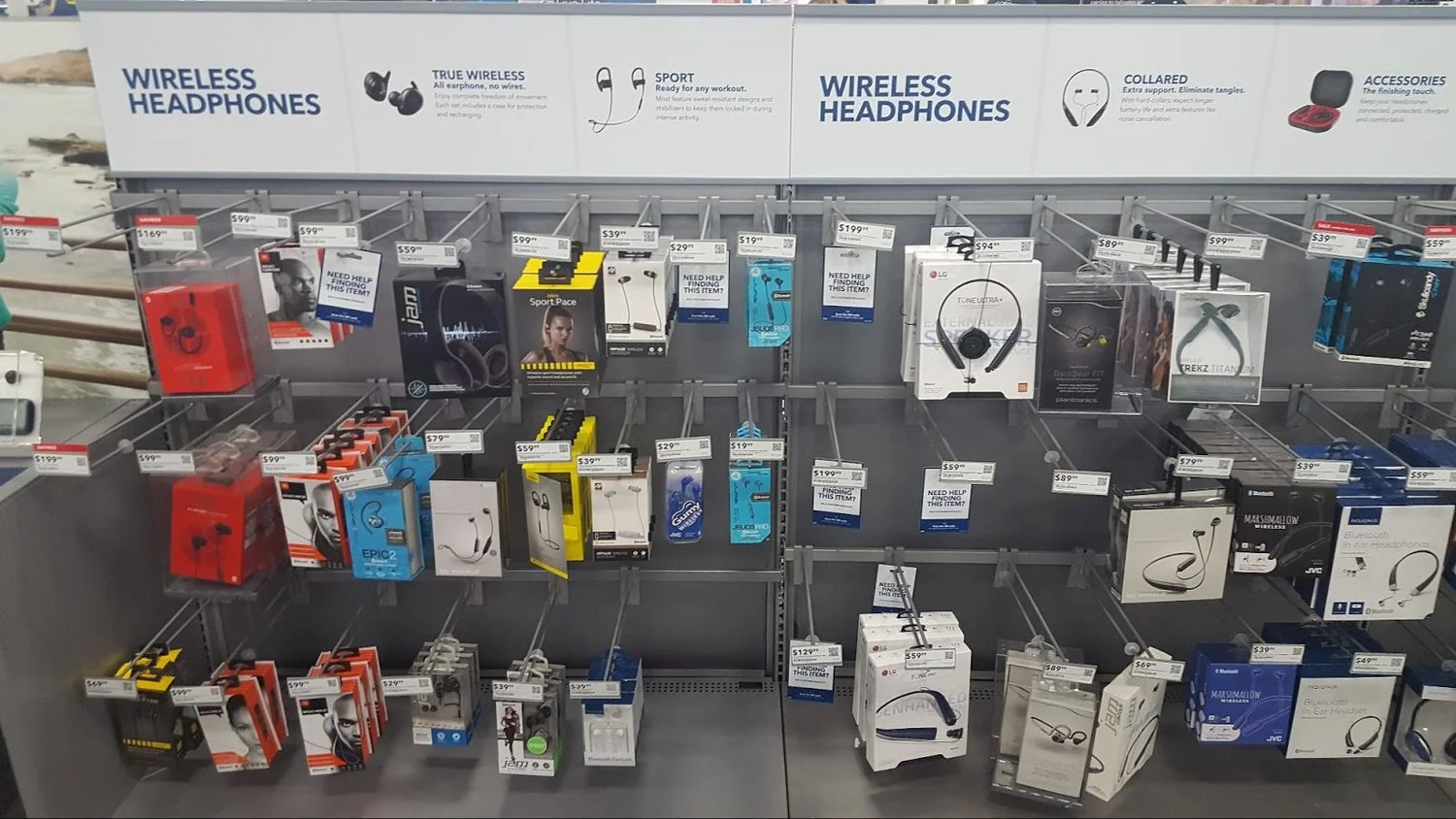
Conducted field studies in which we observed users and the environment of the context in which we were designing. Noted user behaviors, crowds, and rack design within the stores. Observed stores like Apple Store, BestBuy, Target, and Barnes and Noble.


Semi-Structured Interviews
10+ people were interviewed.
We began by asking a sample population about current headphone purchasing processes in order to determine users existing needs, how they weigh purchasing decisions, and what would cause or deter a purchase.
Below is a sample of the questions asked:
Do you buy headphones mostly at stores rather than online? Why?
What’s the major factor(s) that makes you purchase a new pair of headphones?
Could you describe your latest purchase experience?
Were you satisfied with your last purchase? Why or why not?

Survey
500+ complete responses were recorded.
In order to validate and quantify findings from interviews, observations, and contextual interviews, a survey was employed.
Preliminary findings include:
Style factor weighs a little more for people who bought offline than online.
Overall people do not value or trust sales associate’s reviews compared to other resources.
Sound quality and comfort are consistently ranked as high priorities for our users.
What resources did you use to purchase your last pair of headphones?
Contextual Inquiries
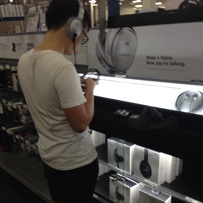
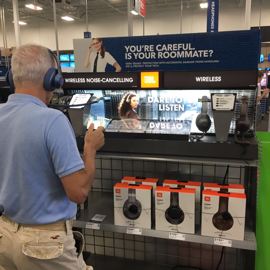
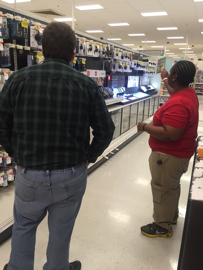
Contextual inquiries were performed in-store to directly record and note an actual user's behaviors, thought processes, and wants/needs when purchasing headphones within the store. This was to observe actual behavior versus what a user says they will do.

Analyzing + Synthesizing
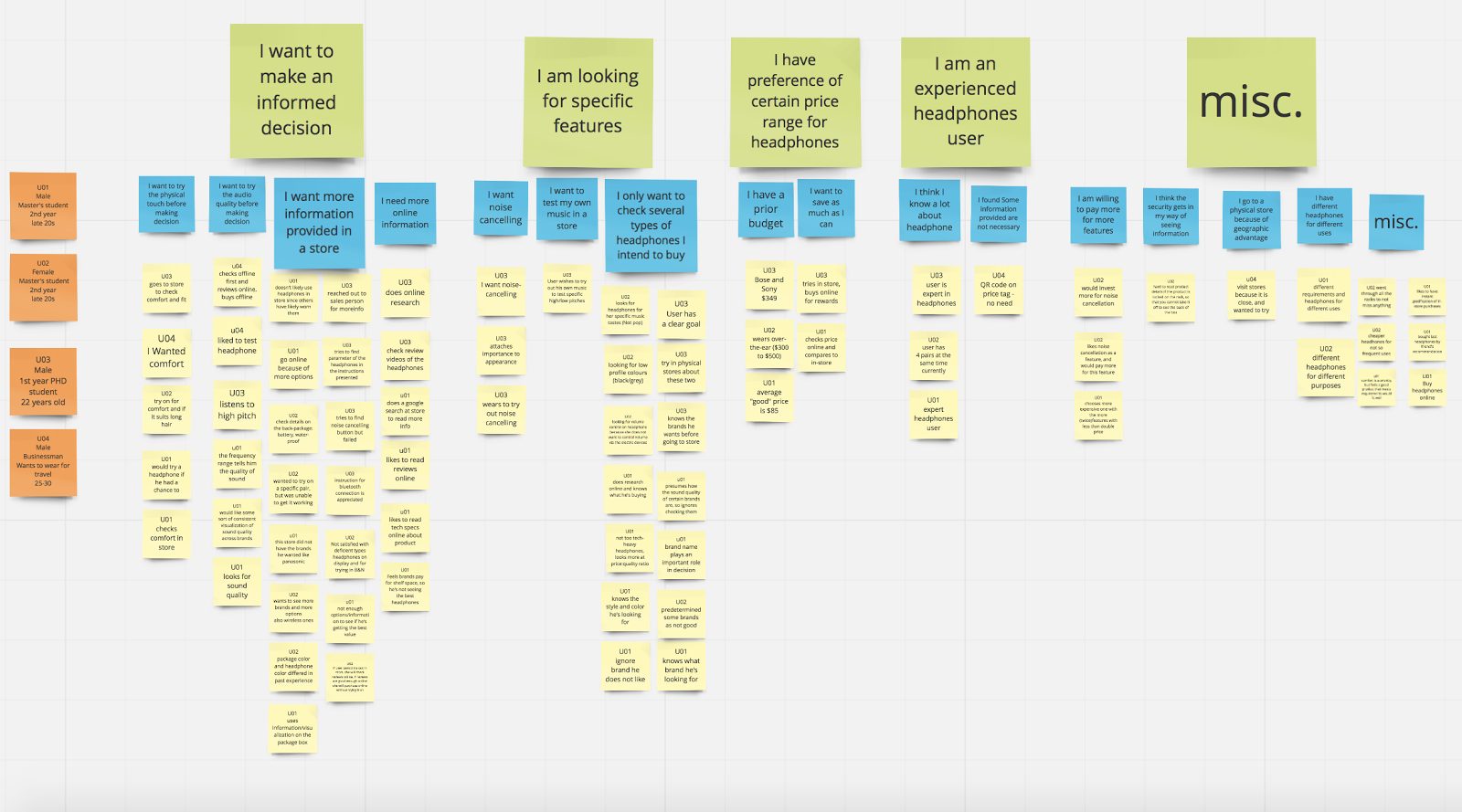
Affinity Mapping
Used to capture research insights, observations, concerns, or requirements by grouping specific details together to named categories or themes based on shared intent, issues, or problems.
Helped make tacit knowledge and information buried in transcripts and note more visible and assist in synthesis of findings.
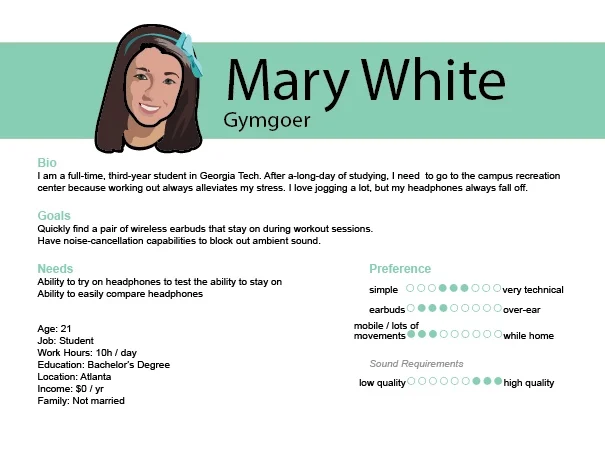
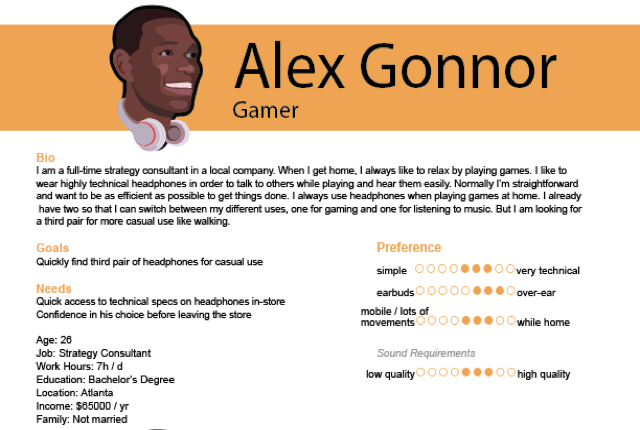
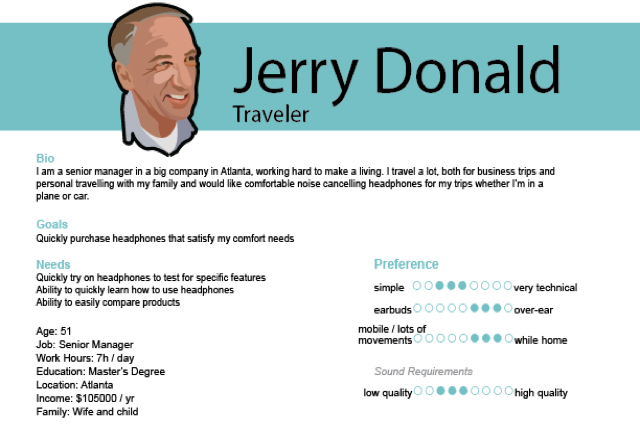
Personas
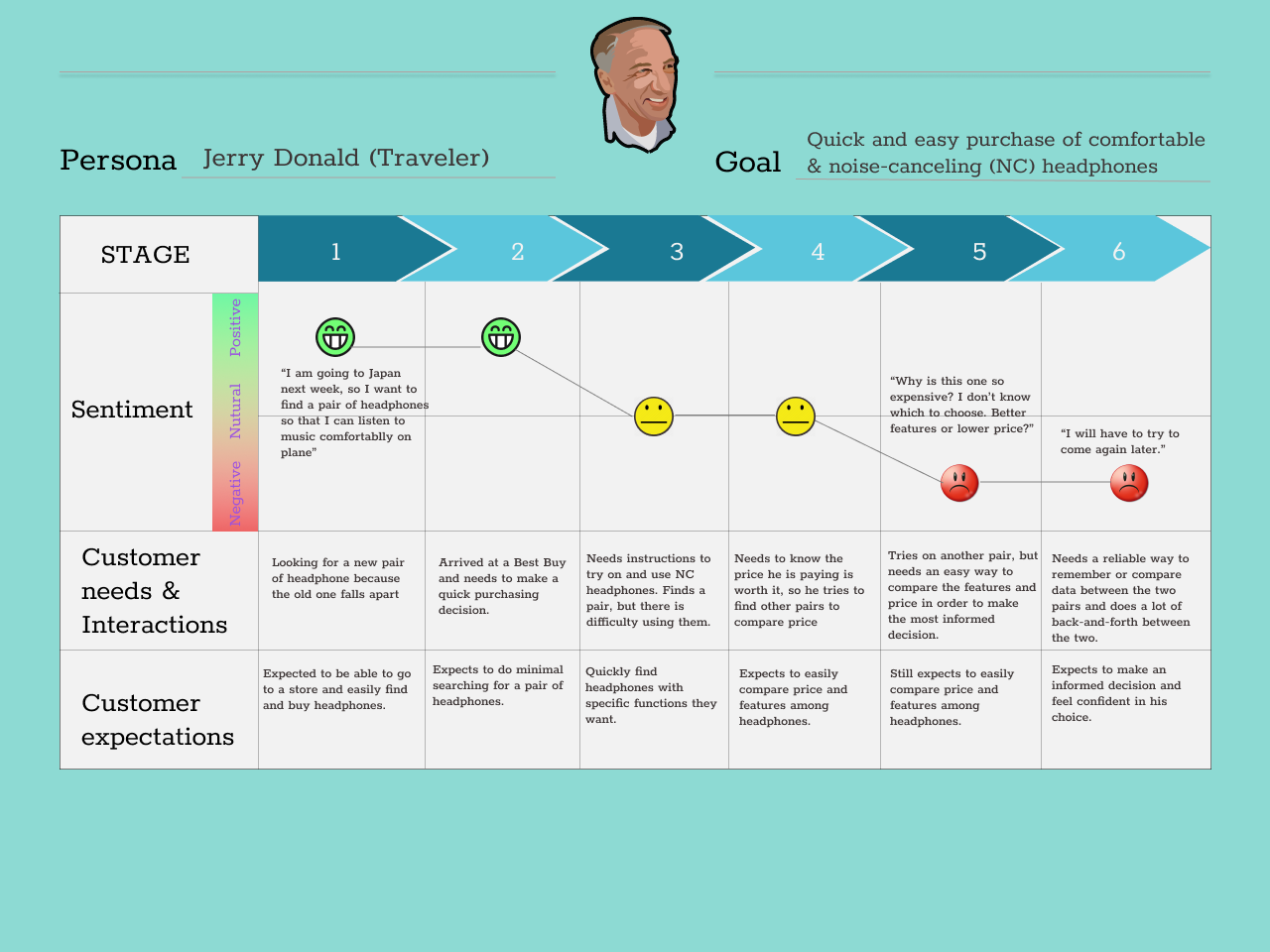
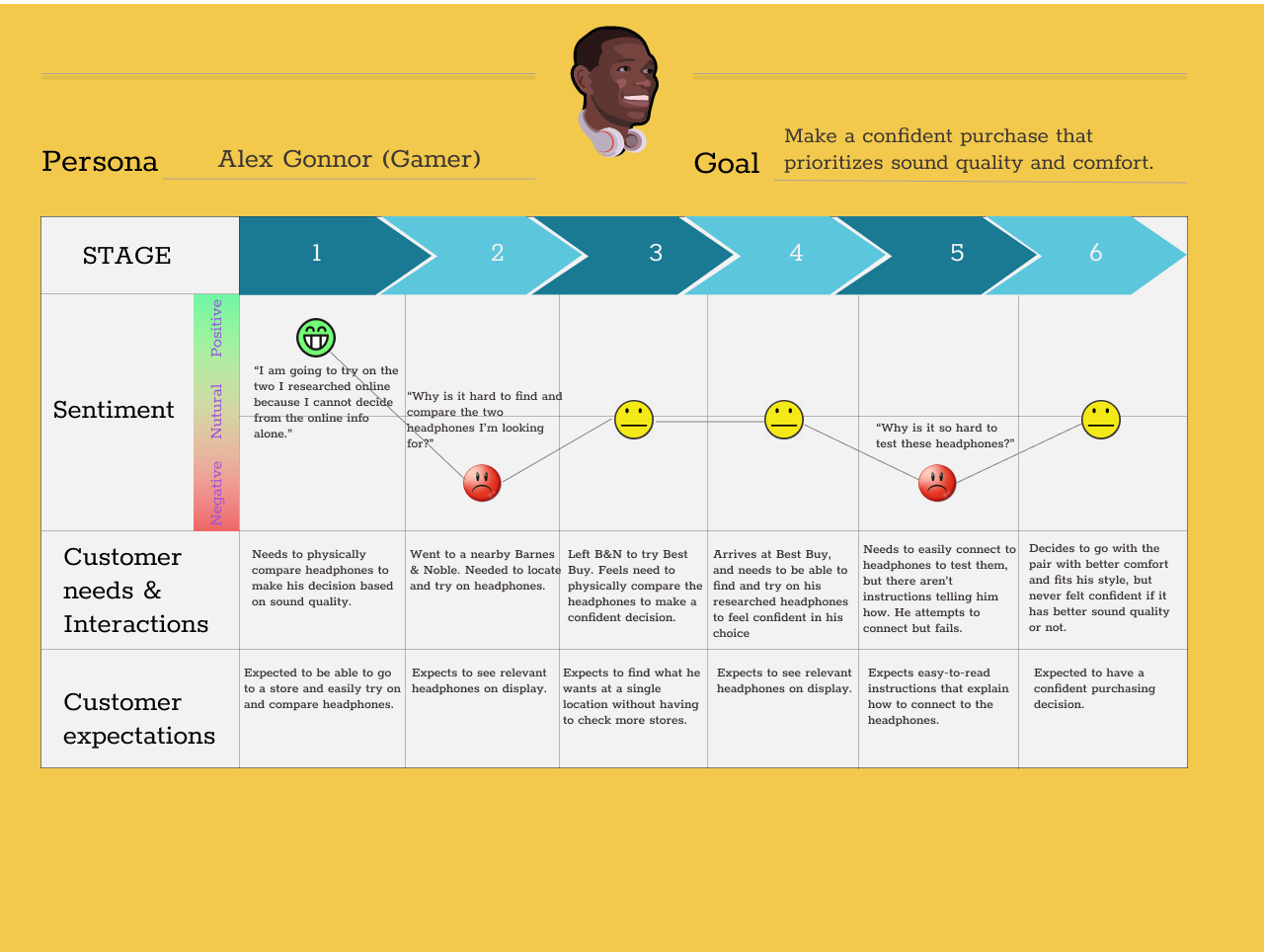
Crafted three different personas based on trends in behavioral and attitudinal data from observations, interviews, and survey.
Each persona captured common behaviors in meaningful and relatable profiles that would humanize design focus, test scenarios, and aid in design communication while providing human descriptions to aid in empathy building.
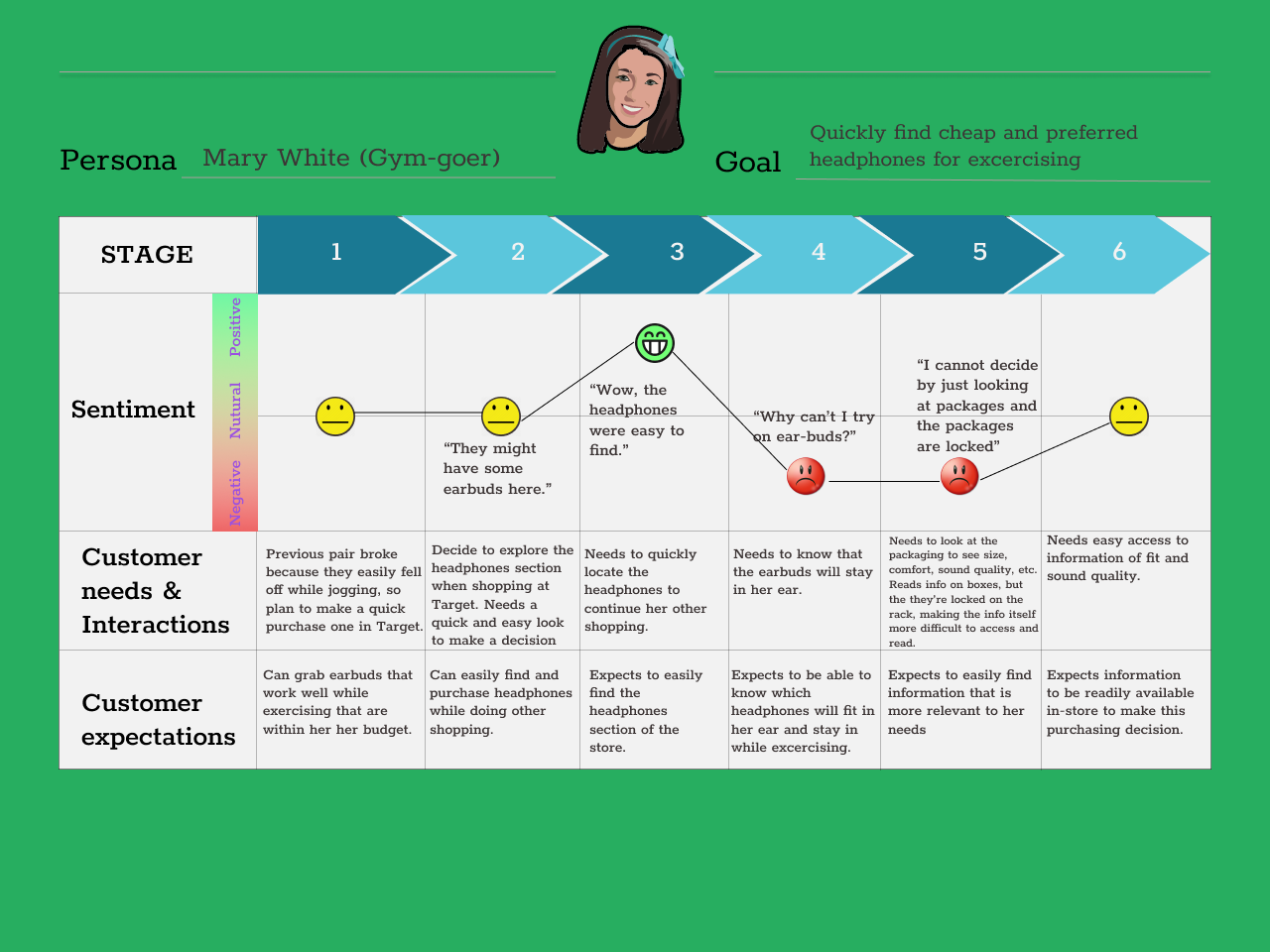
User Journey Maps
Helped to tell a visual story about our personas’ actions, feelings, perceptions, and mindsets as they go through their purchasing process.
Displayed each touchpoint of the process to be evaluated and improved by future design directions.
Initial Sketches + Design
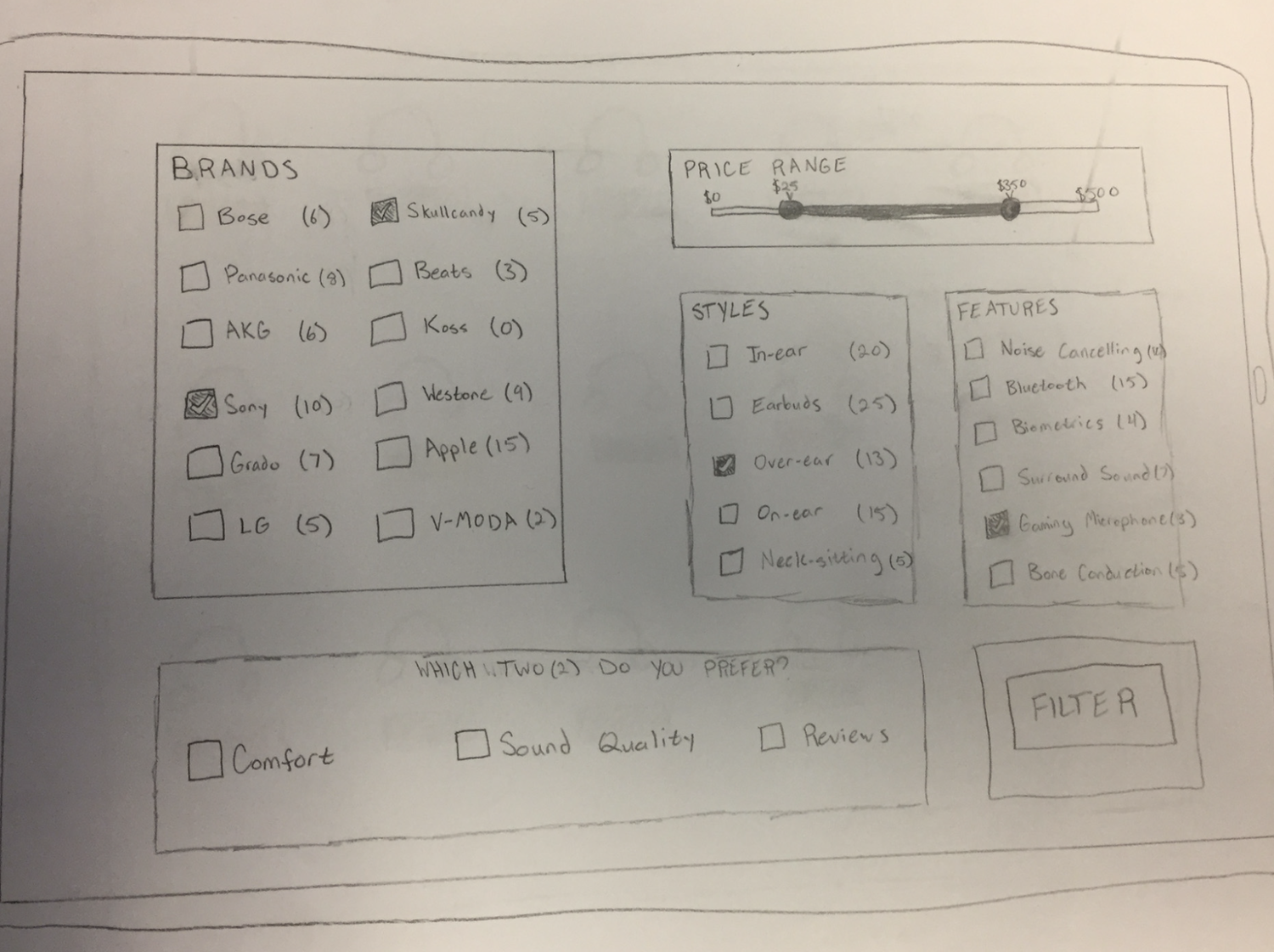
Sketches
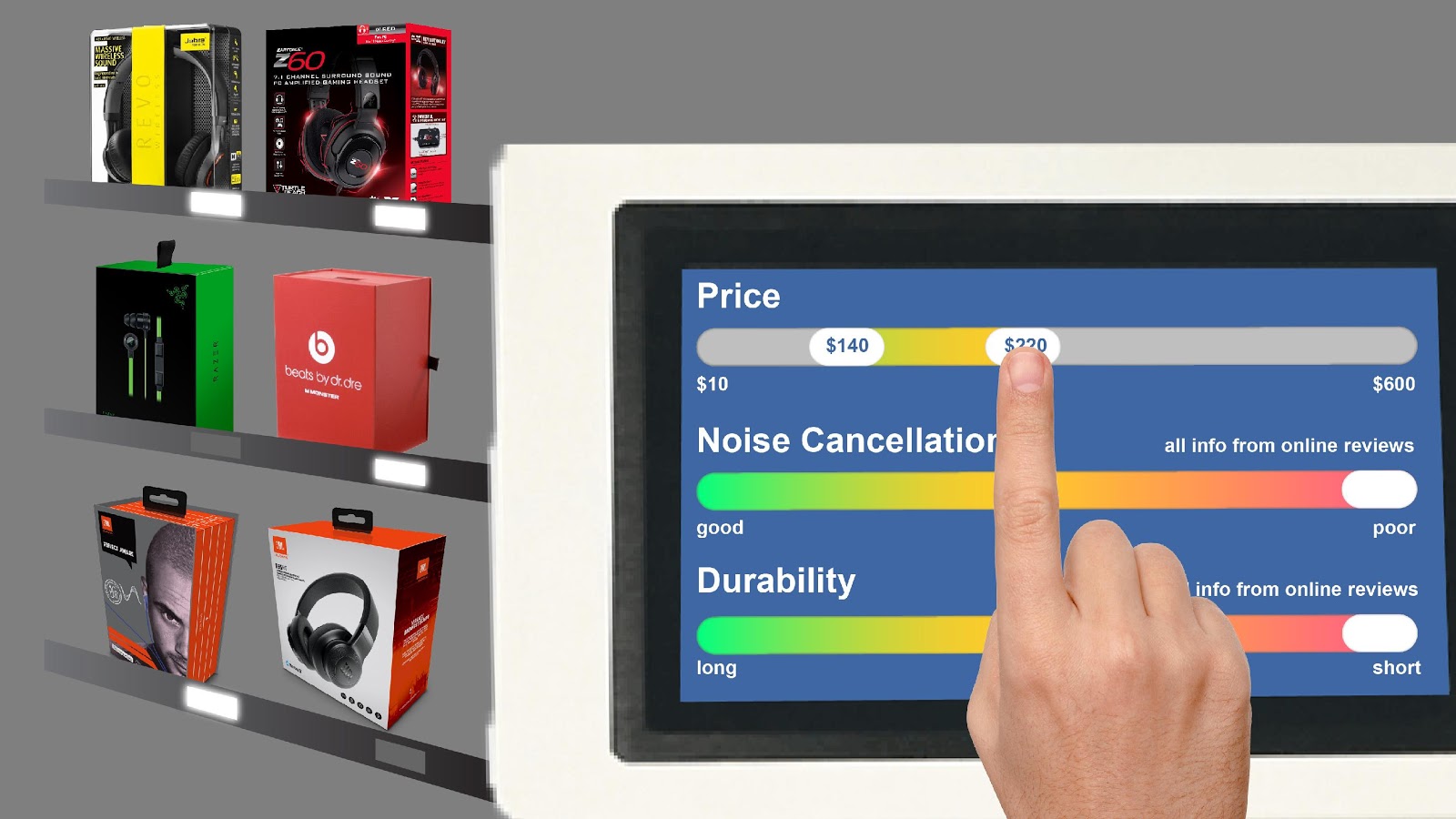
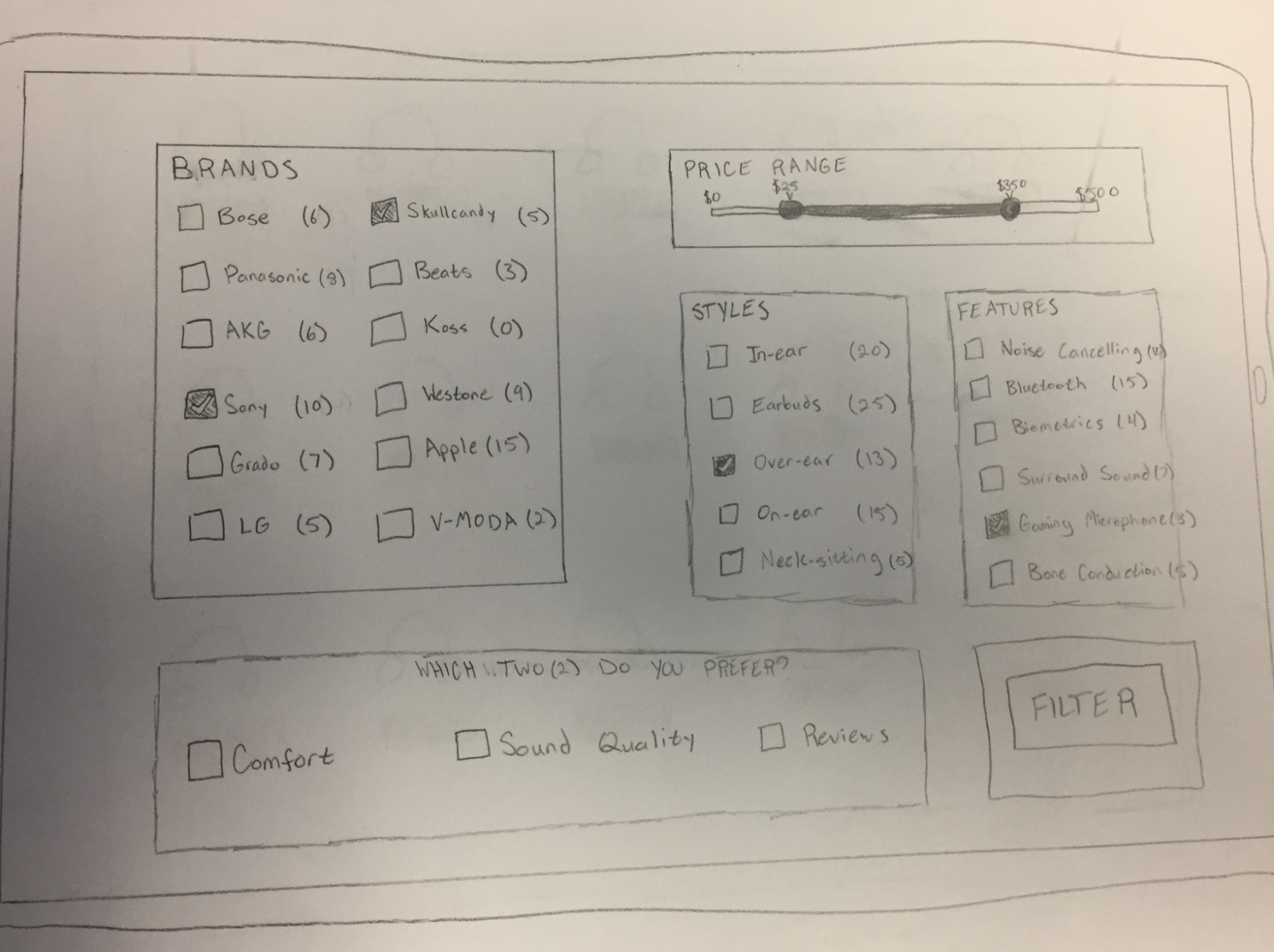
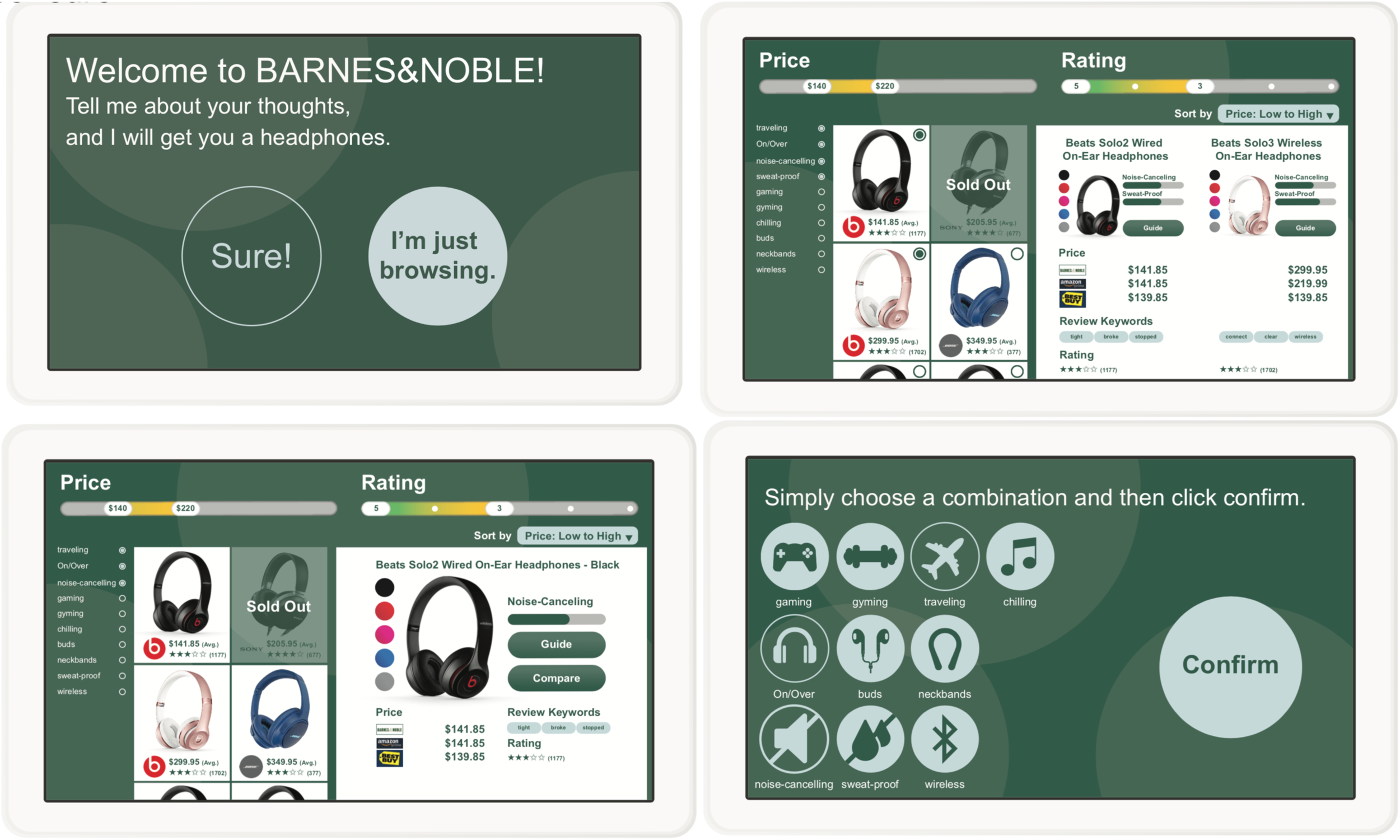
Based on research and talking with our users, we had a brainstorming session in which we came up with many ideas but left with top 3 ideas: An app that located the headphones within the store, a solution that incorporated LED lights that signified how much a pair of headphones fit your needs, and a traditional informational kiosk solution.
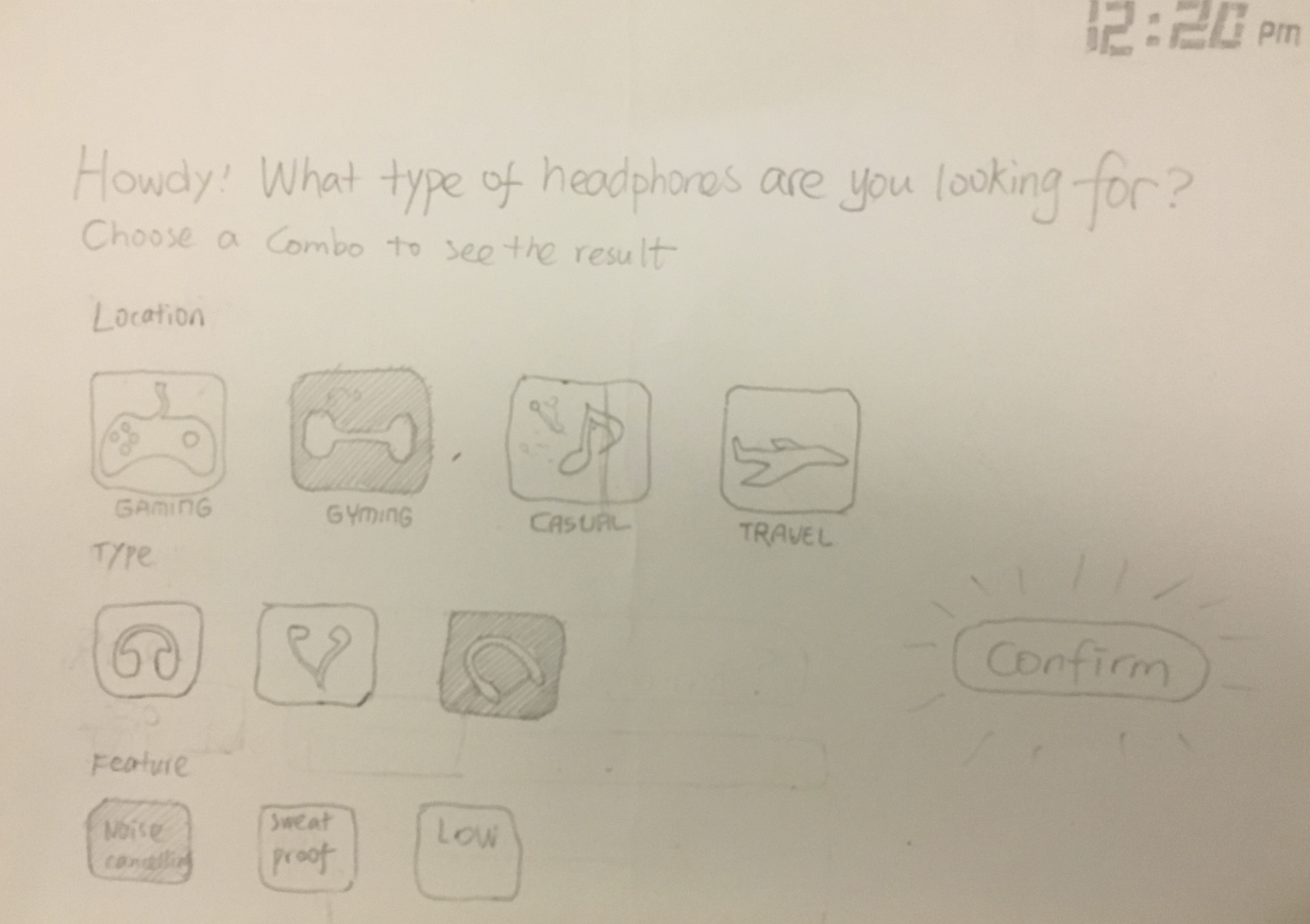
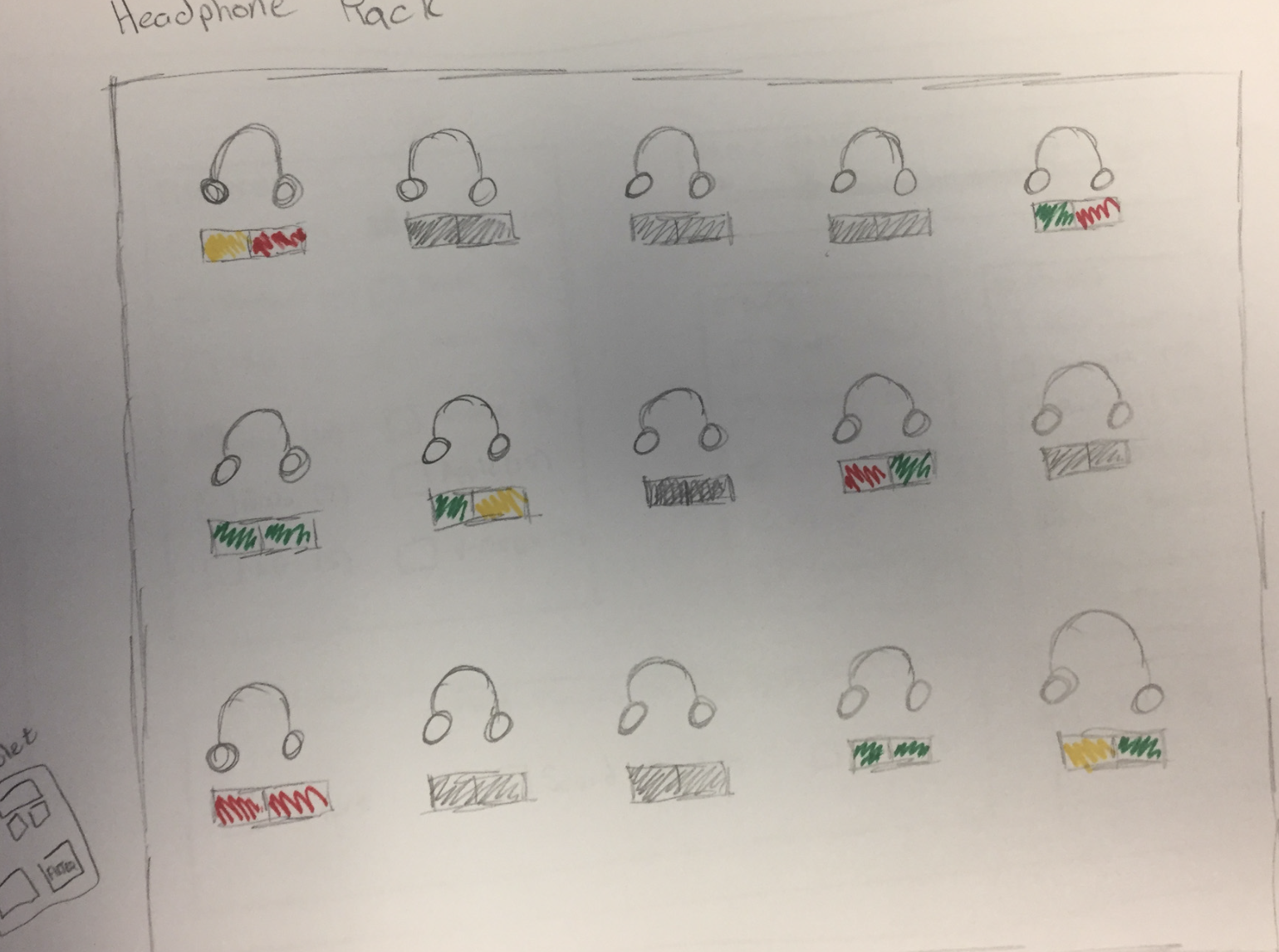
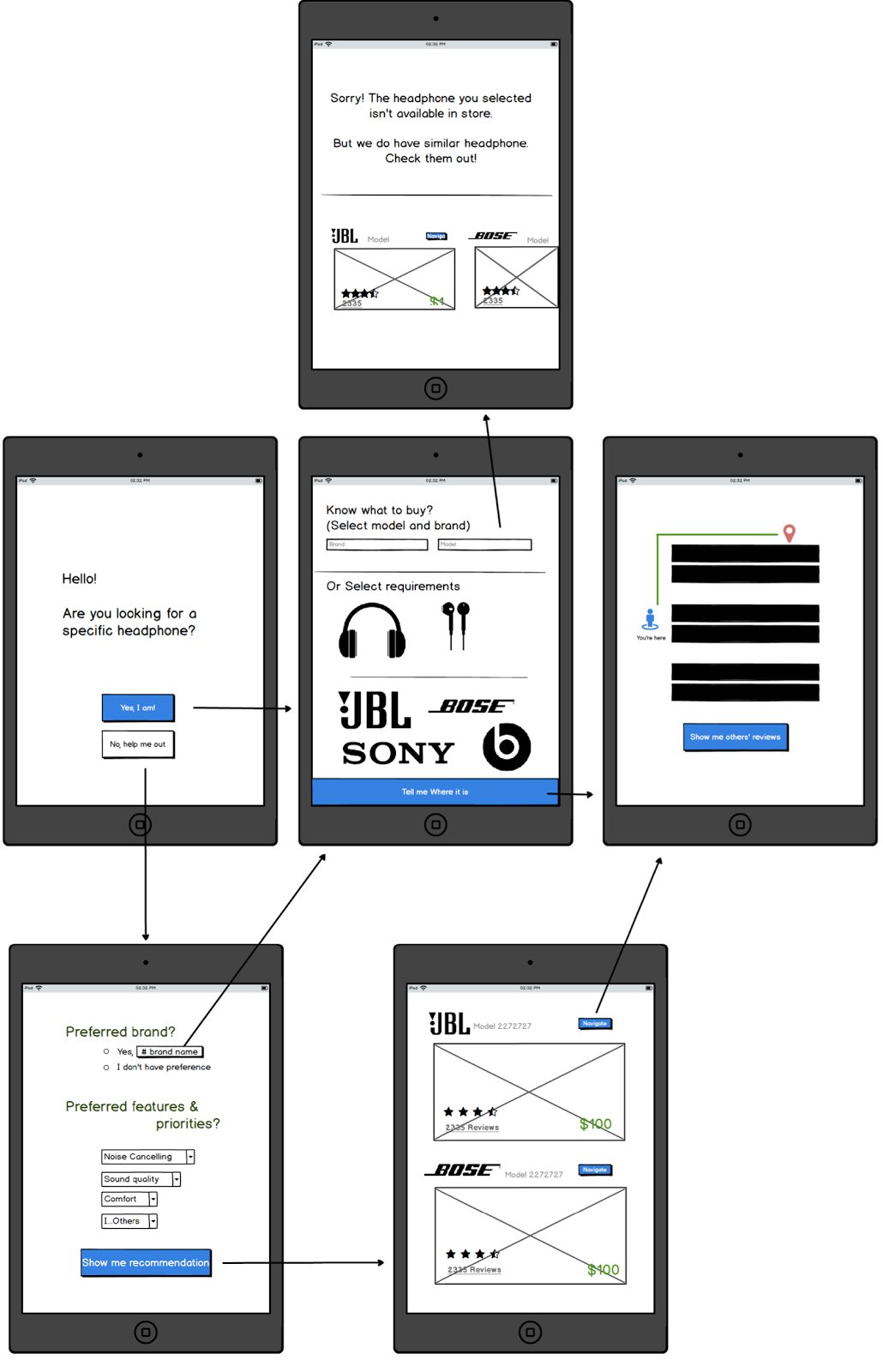
Early Design Concepts
Based on informal feedback sessions with our users, we took our brainstormed sketches and created an initial design.
Evaluation
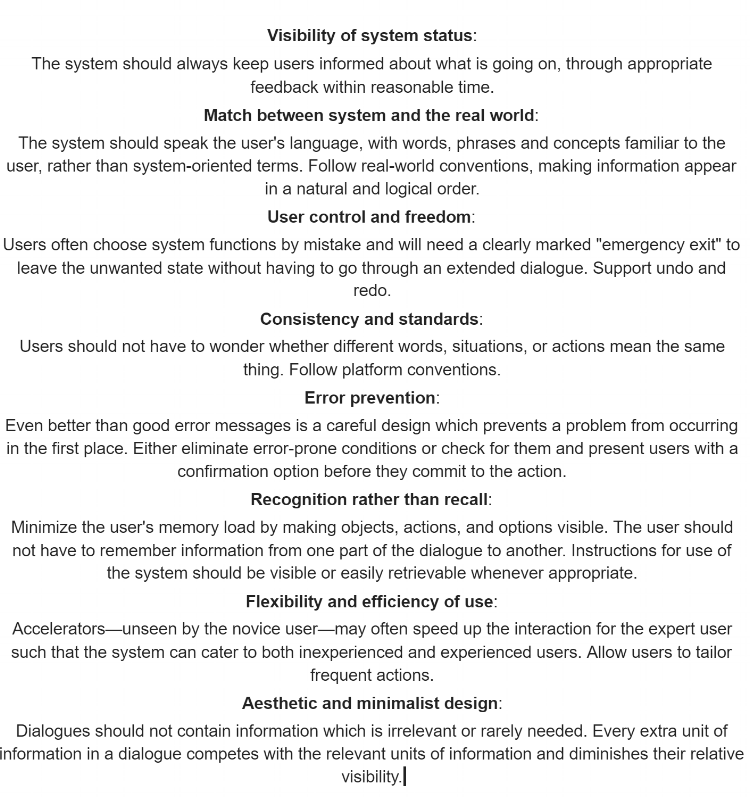
Heuristic Evaluation
Asked design experts to inspect the interface on a set of usability heuristics while completing three tasks in order to inspect and fix usability problems before user testing.
Also helped detect critical but missing dialogue elements early in our design process.
3 Tasks:
1. Look up info on a pair of workout headphones from $25 to $80
2. Compare two sets of headphones
3. Find where your selected headphones would be in the store
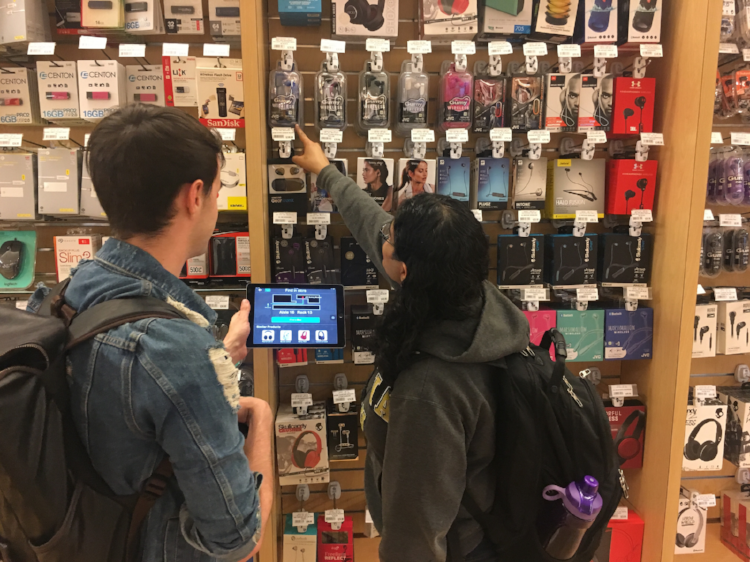
In-person, Simulated Usability Tests
Focused on usability while in-store and if the most pertinent and detailed info was provided to the user. Performing usability tests in the actual context of use helped determine the most prominent usage issues as well as changes in the users’ perceptions of the shopping experience.
Users were asked to complete the same 3 tasks as experts in the heuristic evaluations.